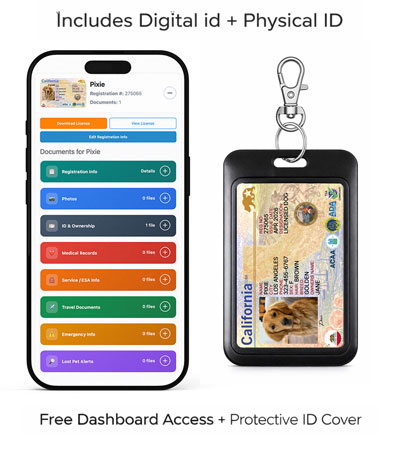
Butte County Dog Registration Information
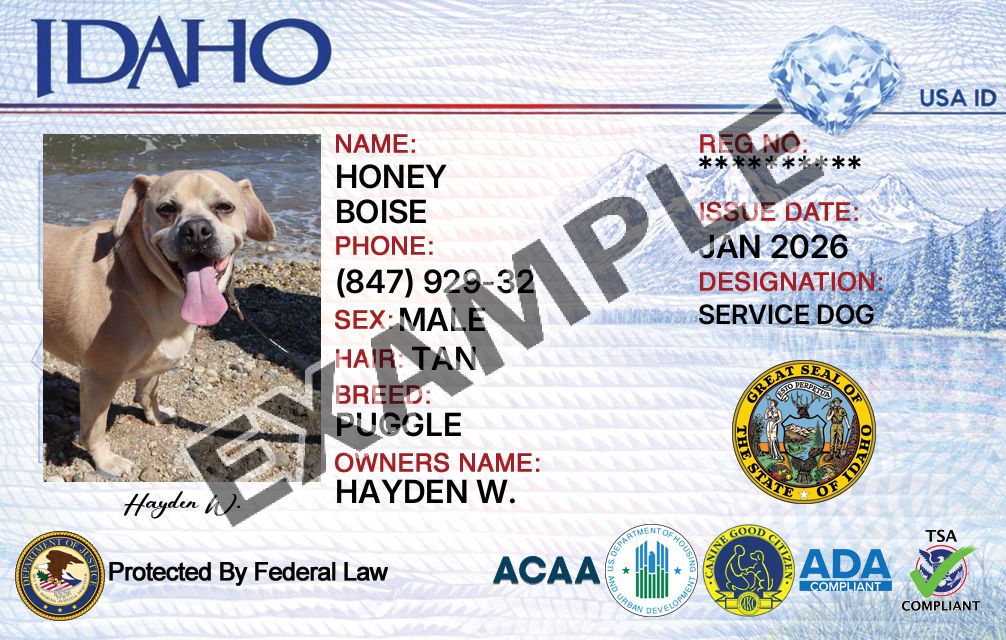
Service Dogs and Emotional Support Animals in Butte, Idaho
If you’re asking where do I register my dog in Butte County, Idaho for my service dog or emotional support dog, the answer usually depends on where you live within the county (inside Arco city limits vs. unincorporated Butte County, or another incorporated area). In Idaho, dog licensing and animal control are commonly handled locally—often by a city clerk’s office or the county sheriff’s office—while public health partners may be involved in rabies exposure response and bite-related guidance.
This page explains how a dog license in Butte County, Idaho typically works, what “registration” does (and does not) do for service animals and emotional support animals (ESAs), and which official offices are good starting points when you need help with an animal control dog license Butte County, Idaho question.
Where to Register or License Your Dog in Butte County, Idaho
Because licensing is often handled at the county or city level, the offices below are examples of official places to contact in and around Butte County, Idaho. Use them to confirm where to register a dog in Butte County, Idaho based on your physical address, and to ask what documentation is required (commonly rabies vaccination proof).
Butte County Sheriff (Butte County, Idaho)
If you need help with animal control questions (dogs at large, bite reports, enforcement) or you’re in an area without a dedicated animal control department, the sheriff’s office is often the first point of contact.
Butte County Clerk / Auditor / Recorder’s Office (Butte County Administration)
Fri: 8:30 am–1:30 pm
Even when the clerk’s office is not the licensing issuer for your specific area, it can help route you to the correct local office and explain what documents you’ll need to bring.
City of Arco (Dog, Cat & Ferret Licensing Issued by the City Clerk)
If you live inside Arco city limits, local code indicates licensing/registration is handled by the city clerk, and proof of rabies vaccination is presented at licensing.
Southeastern Idaho Public Health (Local Health District Office – Arco)
Public health does not usually sell dog licenses, but it may provide guidance on rabies exposure, bite-related steps, and coordination with local authorities when needed.
Overview of Dog Licensing in Butte County, Idaho
What “dog registration” usually means
In most communities, “registering” your dog means obtaining a local license (sometimes called a license tag) tied to an owner and address. A license is typically used to:
- Show your dog meets basic local requirements (often rabies vaccination).
- Provide identification (license tag) that can help reunite you with your dog if it’s found.
- Support local animal control and sheltering services through fees.
Is there a countywide dog license in Butte County?
In Idaho, dog licensing is commonly set by local ordinance (city or county). That’s why “where do I register my dog in Butte County, Idaho” often has two paths:
- Inside city limits (example: Arco): you may license through the city clerk according to city code and procedures.
- Outside city limits (unincorporated Butte County): rules may differ, and the county (often through the sheriff’s office or county administration) may be your best starting point to confirm what applies at your address.
If you’re trying to get an animal control dog license Butte County, Idaho and aren’t sure which jurisdiction you’re in, call the sheriff’s office first and ask who issues licenses for your physical address.
How Dog Licensing Works Locally in Butte County, Idaho
Step 1: Identify your licensing jurisdiction
Your dog license requirement may depend on whether you live within an incorporated city (such as Arco) or in the county outside city limits. The simplest approach is:
- Confirm your physical address jurisdiction (city vs. unincorporated county).
- Ask the appropriate office what the current licensing requirement is.
- Ask what counts as acceptable proof (rabies certificate, veterinarian record, etc.).
Step 2: Prepare the typical paperwork
While requirements vary locally, most offices will ask for some combination of identity and vaccination documentation before issuing a license tag. If you’re searching for where to register a dog in Butte County, Idaho, it helps to gather your documents first so you can complete licensing in one trip or one call.
Rabies vaccination requirements (what to know in Idaho)
Rabies rules can be confusing because Idaho does not have a single statewide pet rabies vaccination law that applies everywhere the same way; instead, local jurisdictions may set their own requirements. Many communities require current rabies vaccination to obtain or renew a license, and local codes can specify how proof must be shown.
For example, within the City of Arco’s animal code, licensing is tied to providing proof of vaccination at the time of application, and local rules also describe what happens when rabies is suspected or when special public safety measures are needed. In practical terms, even when your area does not require a license, keeping your dog’s rabies vaccination current is still an important public health safeguard—especially if a bite or exposure incident occurs.
What if your dog is a service dog or emotional support animal?
Many owners search for a dog license in Butte County, Idaho because they believe it is required to “make” a dog a service dog or ESA. It doesn’t work that way. A dog license is a local animal regulation tool. Service dog status is determined by disability law and the dog’s training and behavior. Emotional support animals are a separate category with different rules and generally do not have broad public-access rights.
Service Dog Laws in Butte County, Idaho
A dog license is not the same thing as a service dog
A service dog is generally understood as a dog that is individually trained to do work or perform tasks for a person with a disability. This legal status is not created by buying a license tag, registering online, or purchasing “certification.”
- Dog license: Local requirement (when applicable) that helps identify your dog and supports local enforcement.
- Service dog status: Based on disability law and task training—no local “registration” is required to make a dog a service dog.
Do service dogs still need local licensing and vaccines?
Often, yes. Even when a local code provides specific exceptions for certain trained assistance animals, service dogs are still typically subject to:
- Basic public health requirements (like current rabies vaccination if your jurisdiction requires it).
- Control requirements (no running at large; must be under handler control).
- Nuisance or dangerous behavior rules (aggressive behavior can still be addressed by local enforcement).
If you are looking up where do I register my dog in Butte County, Idaho for my service dog, focus on two checklists: (1) local dog licensing rules for your address, and (2) maintaining training, behavior, and documentation that supports your dog’s role (for example, training records for your own files).
Emotional Support Animal Rules in Butte County, Idaho
ESA vs. service dog: key differences
An emotional support animal (ESA) is generally a pet that provides comfort through companionship. ESAs are not the same as service dogs because they are not required to be trained to perform specific tasks related to a disability.
- Public access: ESAs generally do not have the same public-access rights as trained service dogs.
- Housing: ESAs may be relevant in housing situations, where documentation may be requested as part of an accommodation process.
- Licensing: An ESA is typically licensed like any other dog if your city/county requires a license.
Do you need to “register” an ESA with the county?
Most of the time, no separate county registry is required to have an ESA. If your area requires a local license, you would follow the same licensing process as other dogs. If you are searching for where to register a dog in Butte County, Idaho for an ESA, the practical answer is: contact the local licensing office for your address and ask about standard licensing requirements and rabies proof.
Avoid common pitfalls
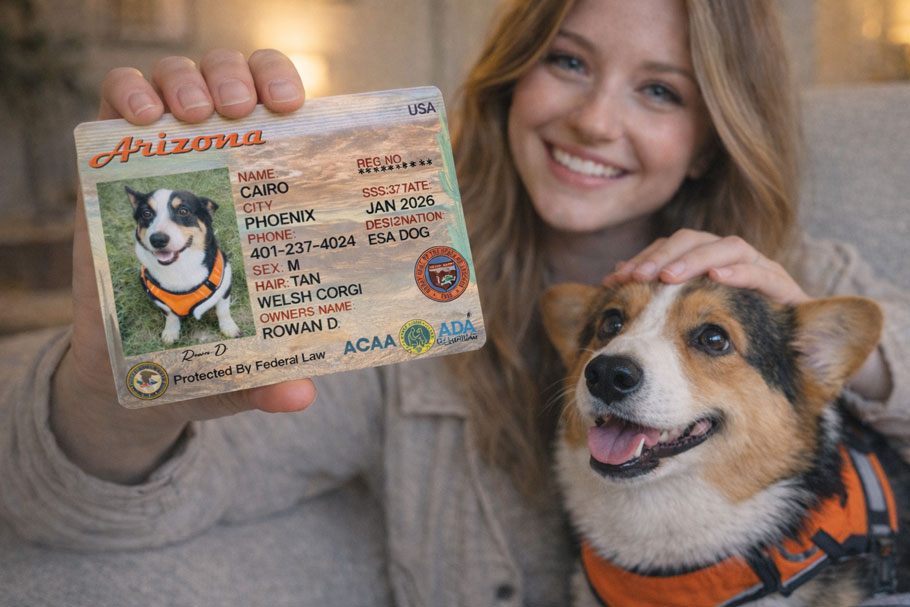
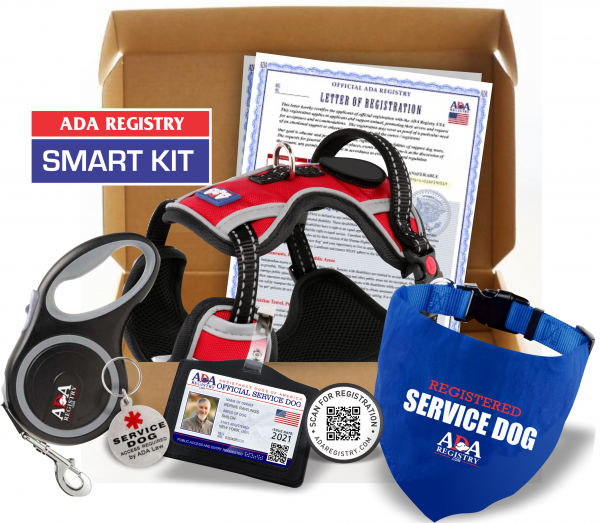
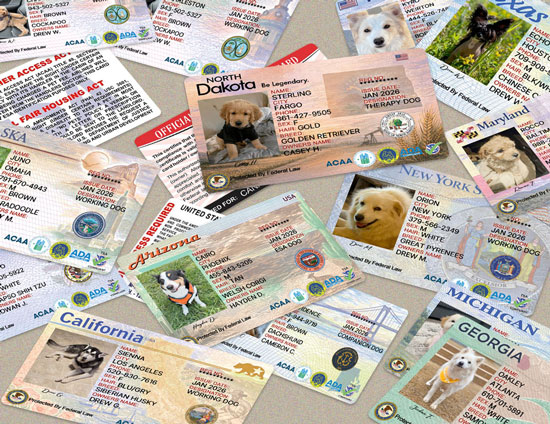
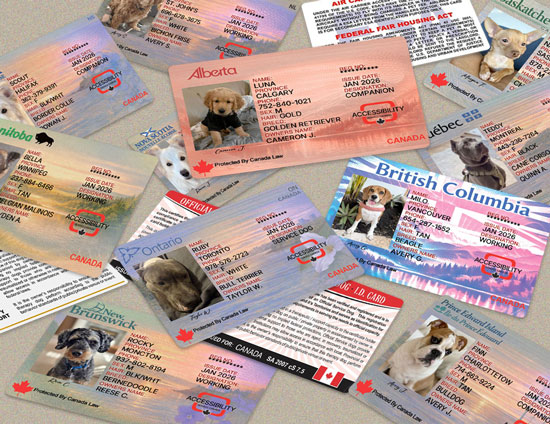
Be cautious about confusing “ESA registration” websites with actual legal requirements. Your local government office will not require you to purchase a vest, ID card, or third-party registration to issue a license tag. If you’re asked to pay a private company to “license” your dog, that’s not the official dog license process.
Frequently Asked Questions
Next Steps
A quick checklist to get licensed correctly
- Confirm your jurisdiction (Arco city limits vs. unincorporated Butte County or another incorporated area).
- Call the correct office from the list above and ask who issues licenses for your address.
- Ask what proof is required (rabies certificate, ID, residency, payment method, etc.).
- Keep copies of your vaccination records and any licensing receipt for your files.
Register A Dog In Other Idaho Counties
Select your county below to get started with your dog’s ID card. Requirements and license designs may vary by county, so choose your location to see the correct options and complete your pup’s registration.
- Ada County Dog Registration
- Adams County Dog Registration
- Bannock County Dog Registration
- Bear Lake County Dog Registration
- Benewah County Dog Registration
- Bingham County Dog Registration
- Blaine County Dog Registration
- Bonner County Dog Registration
- Bonneville County Dog Registration
- Boundary County Dog Registration
- Camas County Dog Registration
- Canyon County Dog Registration
- Caribou County Dog Registration
- Cassia County Dog Registration
- Clark County Dog Registration
- Clearwater County Dog Registration
- Custer County Dog Registration
- Elmore County Dog Registration
- Franklin County Dog Registration
- Fremont County Dog Registration
- Gem County Dog Registration
- Gooding County Dog Registration
- Idaho County Dog Registration
- Jefferson County Dog Registration
- Jerome County Dog Registration
- Kootenai County Dog Registration
- Latah County Dog Registration
- Lemhi County Dog Registration
- Lewis County Dog Registration
- Lincoln County Dog Registration
- Madison County Dog Registration
- Minidoka County Dog Registration
- Nez Perce County Dog Registration
- Oneida County Dog Registration
- Owyhee County Dog Registration
- Payette County Dog Registration
- Power County Dog Registration
- Shoshone County Dog Registration
- Teton County Dog Registration
- Twin Falls County Dog Registration
- Valley County Dog Registration
- Washington County Dog Registration